
Product features

One archive workflow, wherever you find the image.

Individual saves and batch exports share the same Notion database checks, image preparation, and copy-friendly page body.

01 / Single save

Capture a creation before the idea moves on.

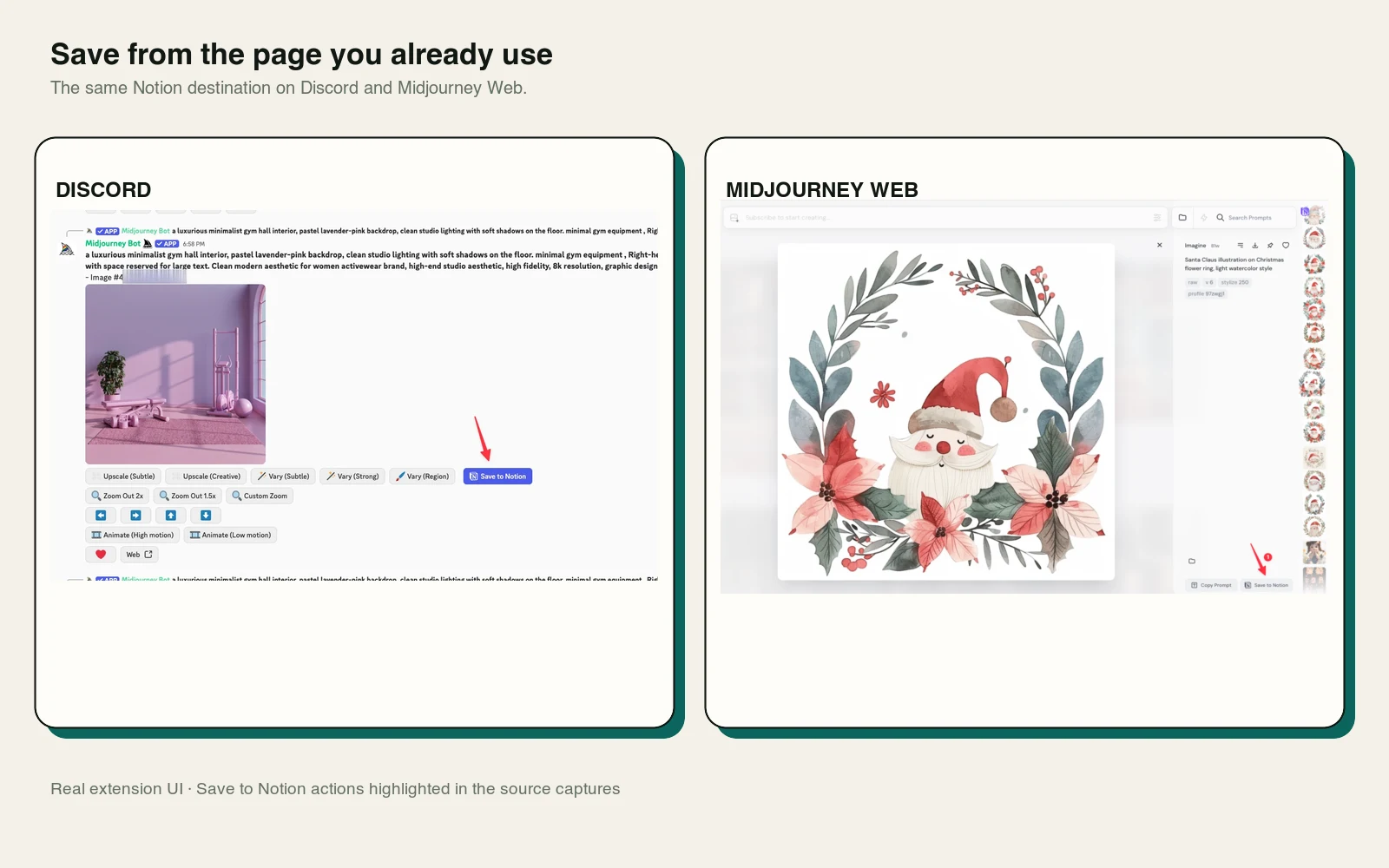
On supported Midjourney Jobs pages, the extension places Save to Notion beside the page actions. On Discord channels, it adds a save action to supported Midjourney message content.
  • Processing feedback appears immediately after the click
  • Reads the supported prompt, image, attributes, version, and source URL
  • Uses the same Notion page body as the batch importer
Save to Notion actions shown on Discord and Midjourney Web
Use the same destination whether the creation is open on Discord or Midjourney Web.
02 / Batch export

Move available Midjourney history with visible progress.

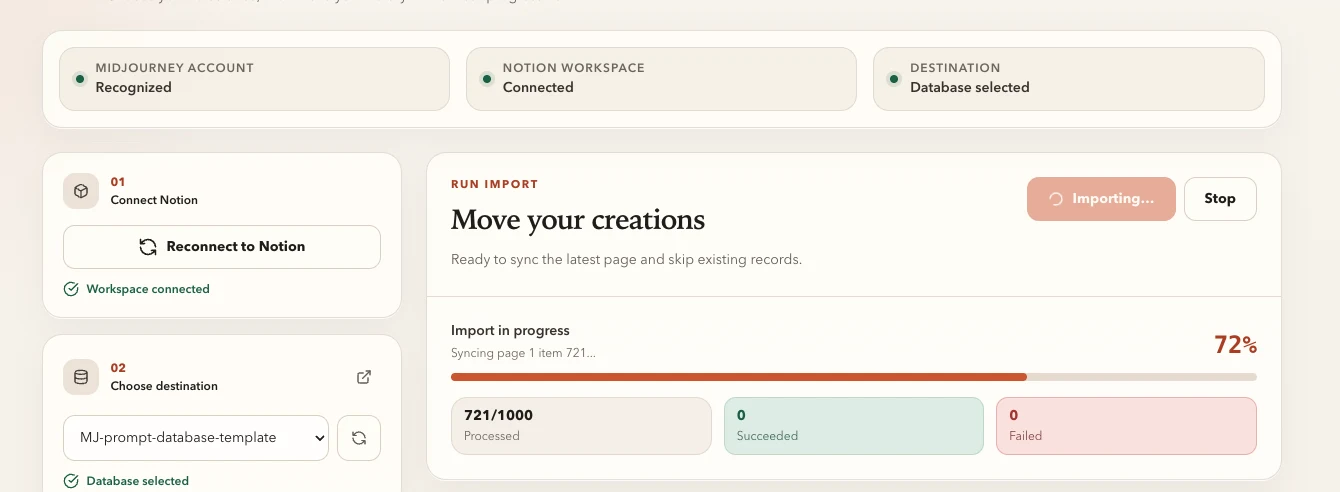
The options workspace retrieves available history pages, then imports records sequentially to reduce API pressure and keep progress understandable.
  • Import the latest available page or continue through history
  • Cancel an active batch
  • See processed, successful, failed, and skipped records
  • Download failed-record history for troubleshooting
Read the batch export tutorial →
Batch export at 72 percent with processed, succeeded, and failed counts
Live progress shows the current page and record, processed count, failures, and a Stop action.
03 / Image storage

Use Notion’s native file upload first.

The extension downloads the supported Midjourney image, creates a Notion file upload, sends the file, and attaches it as both page media and cover. Files above Notion’s direct-upload limit or failed uploads use an R2 fallback.

Primary path

  • Download supported image data
  • Create a Notion file upload
  • Attach the uploaded file to the page
  • Use the same file as page cover

Fallback path

  • Upload the image to the configured R2 service
  • Create an external Notion image block
  • Use the external URL as page cover
  • Continue saving instead of dropping the record
04 / Database readiness

Check required fields before writing records.

Every single save and batch import first resolves the selected Notion data source and verifies its title field and supported properties.

  • Prompt — rich text
  • Attributes — rich text
  • Version — rich text
  • URL — URL
  • Tags — multi-select

If a supported property is missing, the extension adds it. If an existing field uses a conflicting type, the extension stops and explains which field needs attention.
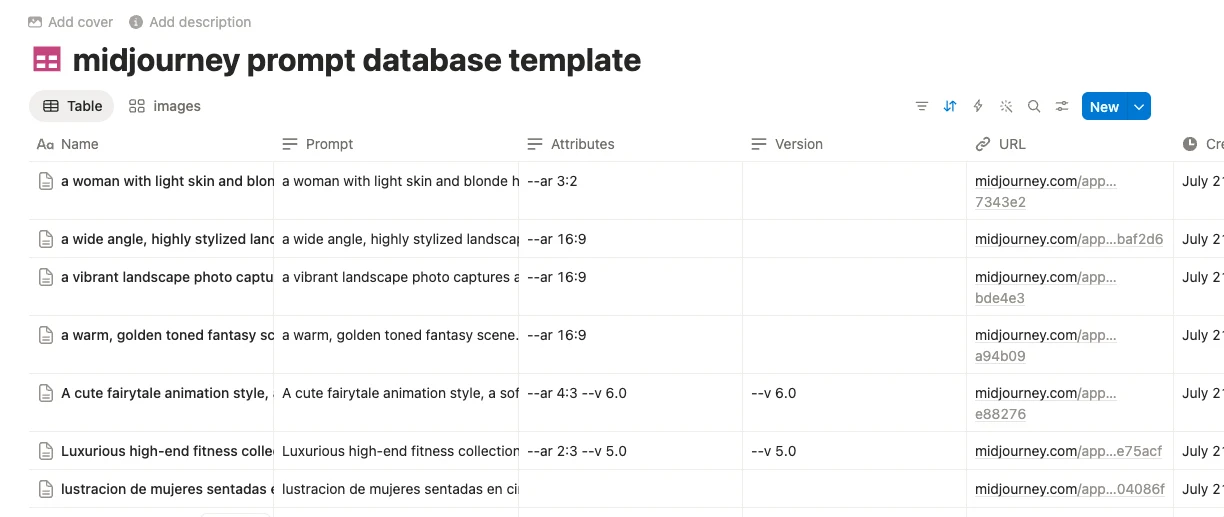
Notion database table with Prompt, Attributes, Version, URL, and creation metadata fields
The resulting database uses consistent fields for prompts, attributes, versions, source URLs, tags, and time.
05 / Copy-friendly pages

Every important value gets its own copy target.

The page body is assembled from headings followed by plain-text code blocks. That keeps long URLs, prompts, and parameters visually separate and easy to copy.

  • Midjourney URL
  • Original image URL
  • Saved image URL
  • Prompt
  • Attributes
  • Version
  • Video URL when available
An opened Notion record containing the exported image, prompt, attributes, URL, tags, time, and version
Each exported creation becomes a readable Notion record; the structured page body continues below these visible properties.
06 / Duplicate behavior

Decide what “already saved” should mean.

Skip existing

Leave the current Notion record untouched and continue to the next Midjourney job.

Replace existing

Archive matching records, then insert the newly prepared page and image.

Always insert

Create a new record even when another page uses the same Midjourney URL.

Ready to build your archive?

Use one consistent structure from the first save onward.